
KLOW Blend 80MG: GHK-Cu, TB-500, BPC-157 & KPV Explained
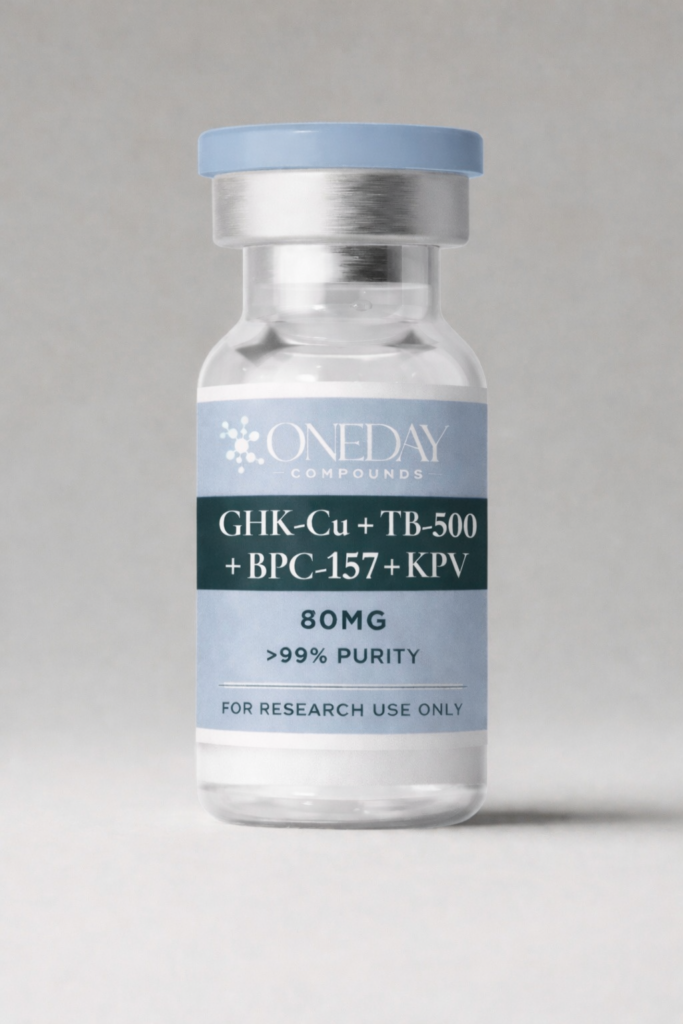
KLOW Blend 80MG is a peptide blend containing four named compounds: GHK-Cu, TB-500, BPC-157, and KPV. Interest in multi-peptide formulations has grown within online research communities, but the scientific and regulatory status of these individual compounds requires careful consideration.
This guide provides an informational overview of the KLOW Blend 80MG formulation, explains the individual components, and highlights important regulatory and safety considerations for people researching peptide products in the USA.
What Is KLOW Blend 80MG?
KLOW Blend 80MG refers to a combined formulation containing:
- GHK-Cu
- TB-500
- BPC-157
- KPV
The “80MG” designation describes the total labeled amount of the blend rather than establishing the safety, effectiveness, or appropriate use of the individual compounds.
People researching peptide products should distinguish between a product’s advertised composition and evidence demonstrating safety or effectiveness in humans. A product being discussed online does not mean that it has received FDA approval for a particular medical purpose.
Understanding the Four Components
GHK-Cu
GHK-Cu is a copper-binding peptide that has been investigated in scientific research involving biological processes such as cellular signaling and tissue-related mechanisms.
However, evidence from laboratory or preclinical research should not be interpreted as proof that a particular commercial peptide product produces the same effects in humans.
FDA materials have identified concerns regarding compounded injectable GHK-Cu, including potential immunogenicity, aggregation, peptide-related impurities, and limited human safety information.
TB-500
TB-500 is commonly associated with the thymosin beta-4 fragment known as LKKTETQ. It has attracted attention in peptide research because of investigations involving biological and tissue-related mechanisms.
FDA information states that it has not identified human exposure data for drug products containing TB-500 and has noted concerns involving immunogenicity and peptide-related impurities.
BPC-157
BPC-157 is another experimental peptide frequently discussed in scientific and online research communities. Preclinical research has investigated several biological mechanisms involving this compound.
The existence of laboratory or animal research does not establish that BPC-157 is safe or effective for treating human medical conditions.
FDA materials have identified potential concerns involving immunogenicity, peptide-related impurities, and limited safety information for proposed routes of administration.
KPV
KPV is a peptide fragment derived from alpha-melanocyte-stimulating hormone and has been investigated in laboratory research.
The amount of available human evidence remains an important consideration. FDA materials state that the agency has not identified human exposure data for drug products containing KPV and lacks important information regarding potential safety issues.
KLOW Blend 80MG and Peptide Research
A multi-component formulation such as KLOW Blend 80MG should not automatically be considered equivalent to a clinically tested combination therapy.
Each component has its own scientific, manufacturing, quality, and regulatory considerations. Combining multiple compounds can also create additional questions concerning identity, purity, stability, compatibility, dosing, and potential interactions.
For that reason, anyone researching peptide products should examine independent documentation rather than relying exclusively on marketing descriptions.
Regulatory Considerations in the USA
The regulatory status of experimental peptides is particularly important for USA-based consumers and researchers.
In 2026, FDA materials continue to discuss BPC-157-, KPV-, and TB-500-related substances in connection with the federal compounding framework. FDA’s July 2026 Pharmacy Compounding Advisory Committee meeting included discussions of BPC-157-related, KPV-related, and TB-500-related bulk drug substances.
FDA documentation has also highlighted concerns associated with several of these substances. This means consumers should not assume that an online peptide listing represents an FDA-approved medicine or an FDA-reviewed treatment.
What Should Buyers Look For When Researching Peptide Products?
People researching peptide suppliers in the USA should look beyond marketing language.
Useful questions include:
- Does the supplier clearly identify the product and its stated composition?
- Is there accessible documentation concerning identity and purity?
- Does the website clearly explain the intended research status of the product?
- Are storage and handling statements supported by appropriate documentation?
- Does the supplier avoid unsupported medical claims?
- Are product descriptions transparent rather than promising guaranteed results?
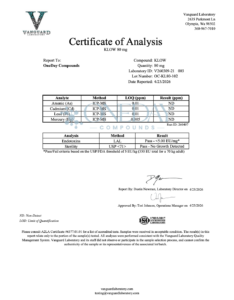
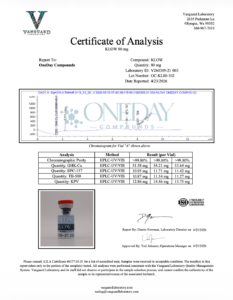
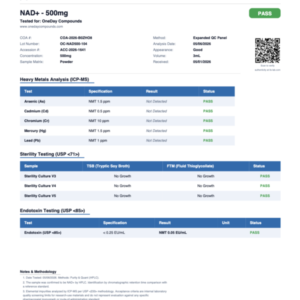
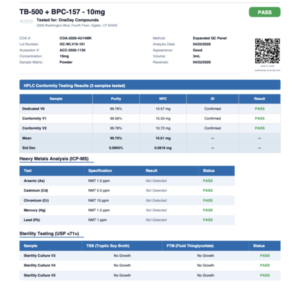
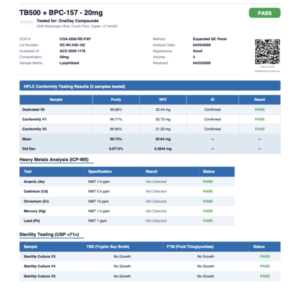
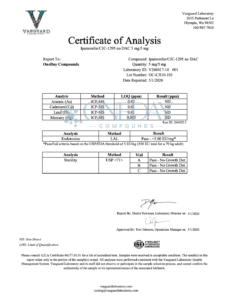
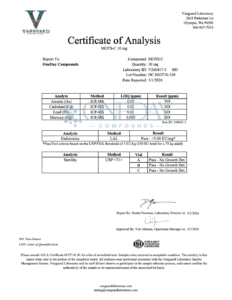
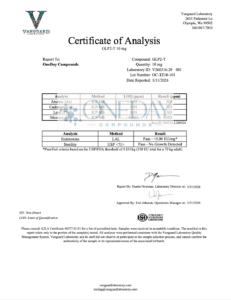
Independent laboratory documentation can provide useful information about a product’s reported characteristics, although a laboratory report does not by itself establish that a product is safe or approved for human use.
Research Peptides and Responsible Information
Searchers looking for terms such as “where to buy peptides” or “peptide supplier USA” should evaluate websites carefully. High-quality product information should distinguish scientific research from established clinical evidence.
For KLOW Blend 80MG specifically, avoid interpreting the product name or ingredient list as evidence of a proven medical benefit. GHK-Cu, TB-500, BPC-157, and KPV each have different research histories, and their presence in one formulation does not establish that the combination has been clinically validated.
KLOW Blend 80MG: Key Takeaways
KLOW Blend 80MG is described as a combination of GHK-Cu, TB-500, BPC-157, and KPV. These compounds have attracted interest in peptide research, but their regulatory and safety considerations remain important.
For USA-based researchers, the most useful approach is to review product documentation, distinguish preclinical findings from human clinical evidence, and avoid unsupported claims about therapeutic outcomes.
Google’s current guidance also favors clear, useful, trustworthy information over pages written primarily to capture search traffic. A strong peptide website should therefore prioritize transparency, original information, accurate product descriptions, and clear sourcing.
For your website, use your canonical domain consistently as onedayscompounds.com rather than mixing it with similarly spelled domains. Your internal links should also use descriptive anchor text and point to the most relevant page rather than repeatedly linking the same keyword phrase. Google recommends clear, descriptive titles and useful page descriptions rather than unnecessarily repetitive wording.
Be the first to review “GHK-Cu + TB-500 + BPC-157 + KPV (KLOW BLEND) 80MG”
Related products
Research peptides
Research peptides
Research peptides
Research peptides
Research peptides
Research peptides
Research peptides
Research peptides
Reviews
There are no reviews yet.