
TB-500 + BPC-157 Wolverine Blend 10MG: Research Guide
TB-500 and BPC-157 are synthetic peptide compounds that have attracted attention in preclinical research. A combination containing both compounds is sometimes marketed under names such as Wolverine Blend 10MG. However, consumers should distinguish research interest from established medical use.
This guide explains what researchers have studied about TB-500 and BPC-157, why the combination attracts interest, and what limitations apply to the available evidence.
What Is the TB-500 + BPC-157 Wolverine Blend?
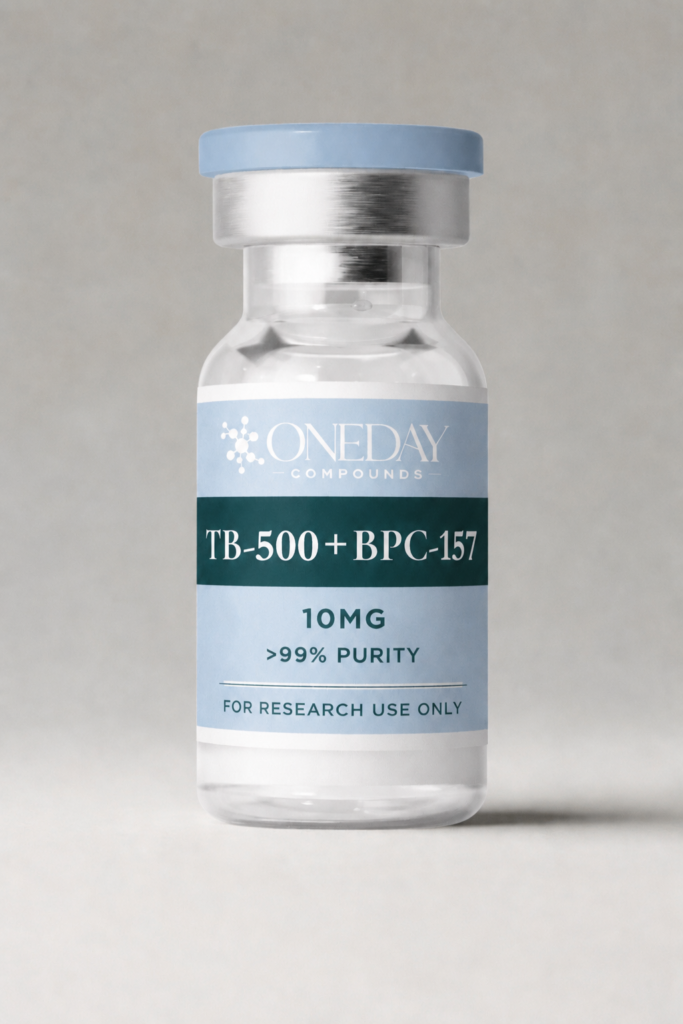
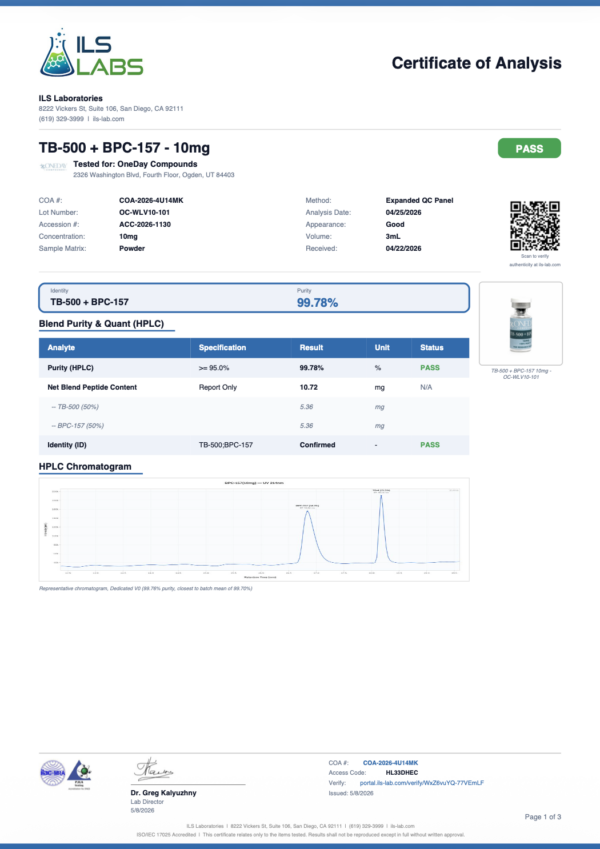
The term Wolverine Blend commonly describes a formulation combining TB-500 and BPC-157. The “10MG” designation describes the total amount stated for the particular formulation and does not, by itself, establish how much of each individual compound the product contains.
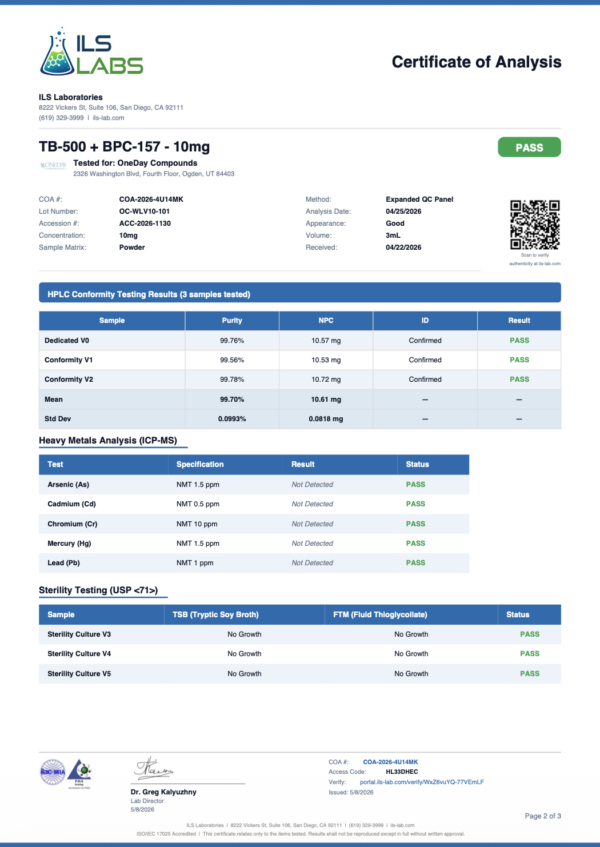
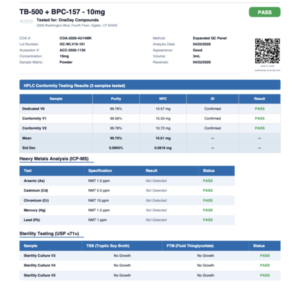
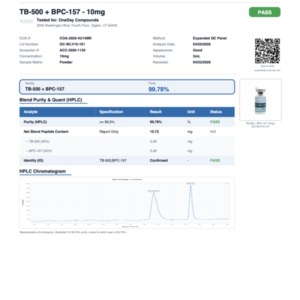
Because formulations can differ between suppliers and laboratories, readers should review the actual product documentation rather than assuming that every Wolverine Blend has the same composition.
What Is TB-500?
TB-500 is commonly described as a synthetic peptide related to thymosin beta-4. Researchers have investigated thymosin beta-4 and related compounds in laboratory and animal models involving biological processes such as tissue repair, cellular migration, and angiogenesis.
Importantly, findings from laboratory or animal research do not automatically demonstrate that TB-500 produces the same effects in humans.
The distinction matters when evaluating online information. A research finding can provide a reason for further investigation without establishing a clinically proven treatment.
What Is BPC-157?
BPC-157 is another synthetic peptide that has received attention in preclinical research. Laboratory and animal studies have investigated various biological mechanisms involving gastrointestinal tissues, blood vessels, inflammation, and tissue repair.
Despite substantial online discussion, the amount of high-quality human clinical evidence remains limited compared with approved medicines.
Anyone researching BPC-157 should therefore separate experimental findings from established medical recommendations.
Why Are TB-500 and BPC-157 Combined?
Interest in combining TB-500 and BPC-157 largely comes from the overlapping biological pathways researchers have investigated for the individual compounds.
That does not mean that combining them has been proven to provide additional benefits in humans.
A combination product should not be considered clinically validated simply because its individual ingredients have appeared in scientific research. Researchers need controlled studies that specifically evaluate the combination, including its effectiveness, pharmacology, safety, and potential interactions.
TB-500 + BPC-157 Research Status
The biggest consideration when evaluating these compounds is the difference between preclinical research and clinical evidence.
Animal and laboratory studies can help researchers understand biological mechanisms and identify questions for future investigation. Human clinical trials provide a much stronger basis for determining whether a compound is effective and safe for a particular medical purpose.
For TB-500 and BPC-157, online claims can sometimes go beyond what the available evidence demonstrates. Readers should examine the quality, design, population, and limitations of studies before drawing conclusions.
Safety Considerations
Experimental peptide products can present uncertainties that do not apply to medicines that have undergone extensive regulatory review.
Potential concerns can include product identity, purity, concentration, contamination, storage conditions, manufacturing quality, and unexpected biological effects.
A product label alone does not establish clinical safety.
People considering an experimental compound should discuss their circumstances with a qualified healthcare professional rather than relying on marketing material or online testimonials.
Peptide Research in the USA
The regulatory status of an experimental peptide matters when evaluating information in the United States. A compound being discussed in scientific literature does not necessarily mean that it has FDA approval for treating or preventing a disease.
Consumers should check current information from authoritative regulatory and medical sources before making decisions involving experimental compounds.
For general information about research materials and peptide science, you can also explore the educational resources available through One Days Compounds, while recognizing that website information should not replace professional medical advice.
How to Evaluate Peptide Information Online
When researching a product such as TB-500 + BPC-157 Wolverine Blend 10MG, consider several factors:
- Look for identifiable scientific sources.
- Distinguish animal research from human clinical trials.
- Avoid claims that promise guaranteed results.
- Check whether a compound has an established medical indication.
- Examine product composition and documentation carefully.
- Consider regulatory information relevant to your country.
- Speak with an appropriately qualified healthcare professional about medical decisions.
These practices help readers make better-informed decisions and reduce the risk of confusing experimental research with established medical treatment.
TB-500 + BPC-157 Wolverine Blend 10MG: Key Takeaways
TB-500 and BPC-157 remain subjects of scientific and preclinical interest. A product marketed as a Wolverine Blend 10MG combines the two compounds, but the name itself does not establish clinical effectiveness or safety.
The strongest approach to researching these compounds involves examining credible scientific literature, understanding the limitations of preclinical evidence, and checking current regulatory information.
For anyone searching for TB-500 BPC-157 research, BPC-157 research status, or TB-500 peptide research, the most important principle is simple: distinguish scientific investigation from proven medical treatment.
This article provides general educational information and is not medical advice. Experimental compounds should not be used to diagnose, treat, cure, or prevent a disease without appropriate professional guidance.
Be the first to review “TB-500 + BPC-157 (WOLVERINE BLEND) 10MG”
Related products
Research peptides
Research peptides
Research peptides
Research peptides
Research peptides
Research peptides
Research peptides
Research peptides
Reviews
There are no reviews yet.